
Salt Smart This Winter: Small Changes, Big Impact
(Many thanks to Hanna Miller, who is the Watershed Product Manager at The Conservation Foundation in Naperville. Hanna also administers the Salt Smart Collaborative. This article is based on a conversation with her on January 16, 2026.)
One of the most common things we encounter during the winter months is the presence of road salt on our streets and sidewalks. Road salting started in the 1940s and has rapidly increased since then. Within the state of Illinois, approximately 1 million tons of salt is used each winter. Road salt is a significant line item in Villa Park’s municipal budget.
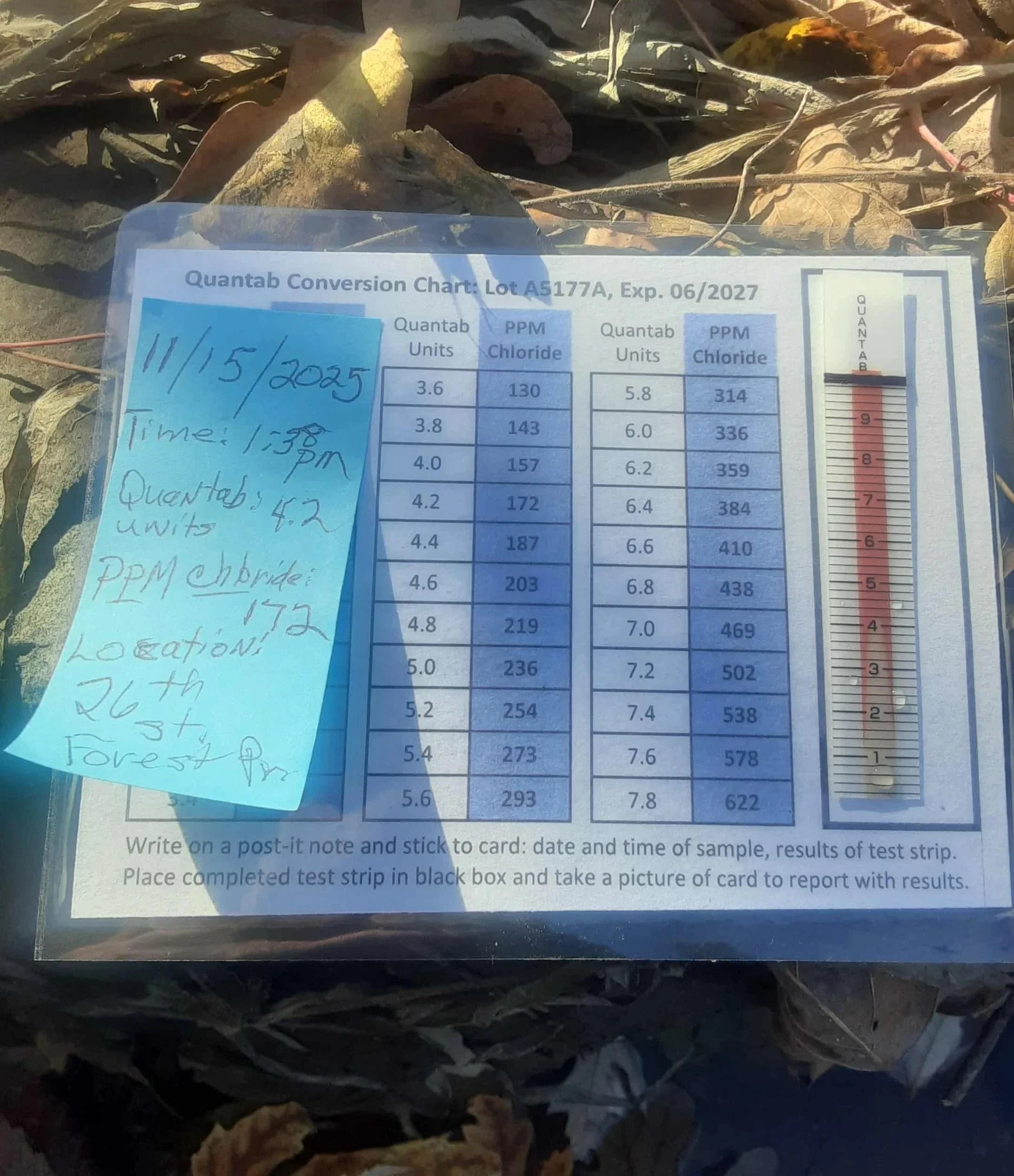
Example of a chloride testing sample.
Road salt, or sodium chloride, works by lowering the freezing point of water, causing ice to melt even when the temperature is below water’s normal freezing point of 32 degrees.
Salt is applied to roads each snow and ice event. As the snow and ice melt, the salt-laden runoff flows into river, streams, and lakes. This continues all winter long, causing chloride levels to spike in the winter. Chloride concentrations gradually diminish as salt washes downstream in spring and summer. It often takes well into the summer for chloride concentrations to get back to “normal.”
Research has shown that Chloride levels in northeastern Illinois rivers, lakes and wetlands have been on the rise for decades. This increase parallels the increase of roads and parking lots that have been built and the subsequent increase of salt applied to those surfaces. Chlorides cause damage to vehicles, infrastructure and the environment, particularly the health of our local waterways.
Salt is highly toxic to plants and animals. Landscaped areas along roads and sidewalks suffer from salt burn when the salt concentrations are too high. Plants die off and are often replaced by salt tolerant invasive species such as phragmites. Salt hurts aquatic organisms in local rivers and lakes too. As chloride concentrations rise in the water, fish, insects, and aquatic plants struggle to survive.
Additionally, salt degrades drinking water quality. As rivers, lakes, and aquifers become saltier, our freshwater sources face long-term risks. Twenty percent of the world’s freshwater supply resides in the Great Lakes region where we live. As we continue to pollute this fresh water with salt, it eventually will no longer be fit for human use or support natural ecosystems.
Excessive salt use damages both infrastructure and ecosystems. Salt is highly corrosive to metal and can cause rapid rusting. Concrete also suffers from salt exposure; small holes, or “pitting,” form, allowing rainwater to seep in, which causes cracking and chipping. Since we build most of our roads, bridges, and buildings from steel and concrete, we are weakening them with corrosive chemicals every time we salt the roads.
Given the threat of the salinization of our land and water, it is clear we must do something to reduce our salt use. Many public agencies are optimizing their winter road maintenance practices Groups like the Salt Smart Collaborative provide technical training aimed at decreasing salt usage without compromising safety.
What can ordinary homeowners do to lessen and mitigate the environmental damage done by salt?
Shovel, blow, sweep of plow snow off paved surfaces before using salt to minimize the need for its application.
Get out early when driving or walking to avoid the need for salt.
Use salt in moderation. A 12 ounce coffee cup of salt should be enough for 500 square feet of driveway or about 10 sidewalk squares.
Distribute salt evenly not in clumps
Sweep up any excess salt after snow event for use in the future
Refrain from using salt when the temperature is below 15 degrees Fahrenheit since it stops working at that temperature.
Consider using sand or other abrasives
By implementing these strategies, homeowners can effectively reduce the use of salt while still maintaining safe and accessible outdoor spaces during winter conditions.
Also, consider participating as a volunteer in the Winter Chloride Monitoring sponsored by The Conservation Foundation.
Lastly, Winter Salt Awareness Week 2026 is coming up January 26-30, 2026. It is a week dedicated to raising awareness around salt pollution and salt reduction strategies. During the last week of January, organizations from across the country come together to highlight challenges, showcase successes, and elevate the message of salt reduction. Winter Salt Awareness Week hosts a series of daily webinars throughout the week to educate and engage in conversation on a variety of salt reduction related topics.